5-hydroxytryptamine (5-HT), commonly known as serotonin, is a neurotransmitter that plays a crucial role in regulating mood, cognition, and various physiological processes such as sleep, digestion, and cardiovascular function. Serotonin’s function spans both the central nervous system (CNS) and the peripheral nervous system (PNS), making it a vital subject in neuroscience and physiological research.
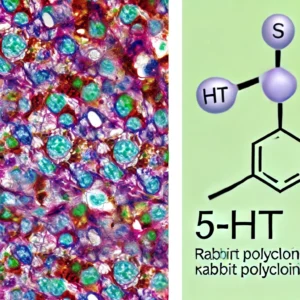
In particular, the 5-HT (Serotonin) Rabbit Polyclonal Antibody has become an invaluable tool for researchers seeking to study serotonin pathways, receptor interactions, and its role in disorders such as depression, anxiety, and gastrointestinal diseases.
Importance of Studying Serotonin
Serotonin is synthesized from the amino acid tryptophan and is involved in various physiological and psychological functions. Its role as a modulator of mood and emotions has made it the focus of studies on mental health disorders such as depression and anxiety. Beyond the brain, serotonin also regulates gut motility, contributing to research in gastrointestinal function (NIH, PubMed).
The Role of Rabbit Polyclonal Antibodies in Serotonin Research
Rabbit polyclonal antibodies are widely used in scientific research due to their high affinity and ability to recognize multiple epitopes on a single antigen. This characteristic makes them ideal for detecting serotonin in tissues or cells where the expression levels may vary or where multiple serotonin-related targets are present.
The 5-HT (Serotonin) Rabbit Polyclonal Antibody specifically binds to serotonin, allowing researchers to:
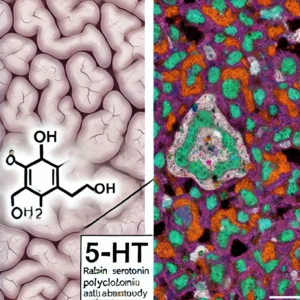
- Visualize serotonin expression in brain tissue using techniques such as immunohistochemistry (IHC) and immunofluorescence (NCBI).
- Quantify serotonin levels in various biological samples using Western blotting or ELISA.
- Study the distribution of serotonin receptors and their signaling pathways in the nervous system (NIAID).
Applications in Neuroscience
In neuroscience, the 5-HT Rabbit Polyclonal Antibody is essential for investigating serotonin’s role in synaptic transmission and neurotransmitter regulation. It is frequently used to study:
- Serotoninergic pathways: Mapping the distribution of serotonin-producing neurons in regions such as the raphe nuclei and their projections throughout the CNS.
- Neurodevelopmental studies: Examining how serotonin influences the development of neural circuits, especially in mood regulation and behavioral disorders (CDC).
- Serotonin’s role in neurodegenerative diseases: The antibody helps to investigate serotonin’s involvement in diseases like Parkinson’s disease, Alzheimer’s disease, and other neurodegenerative disorders (NIH Research).
Applications in Gastrointestinal Research
Since serotonin is also synthesized and released by enterochromaffin cells in the gut, it plays a crucial role in modulating gut motility and secretion. The 5-HT Rabbit Polyclonal Antibody is widely used in gastrointestinal research to:
- Study serotonin’s impact on gut health: Researchers can examine how altered serotonin signaling affects irritable bowel syndrome (IBS), inflammatory bowel disease (IBD), and other gastrointestinal disorders (FDA).
- Evaluate serotonin’s role in the gut-brain axis: There is growing interest in how serotonin in the gut communicates with the CNS, particularly in the context of mental health and stress-related conditions (CDC Healthy Pets).
Methodology and Use of 5-HT (Serotonin) Rabbit Polyclonal Antibody
The 5-HT (Serotonin) Rabbit Polyclonal Antibody is highly sensitive and specific, making it suitable for various laboratory techniques:
- Immunohistochemistry (IHC): Used to stain tissue sections and visualize serotonin distribution in both central and peripheral tissues (VetMed Illinois).
- Western blotting: Quantifies serotonin-related proteins from tissue homogenates or cultured cells, providing insights into serotonin receptor activity and signal transduction (VetMed Ohio State).
- Immunofluorescence: Allows for high-resolution imaging of serotonin in cells and tissues, often used to study its role in neuroplasticity and receptor localization (FDA Animal Veterinary).
Advantages of Using Rabbit Polyclonal Antibodies
Rabbit polyclonal antibodies offer several advantages in research settings:
- High Affinity and Specificity: Rabbit antibodies tend to exhibit higher binding affinity for their target antigens compared to antibodies from other species, improving the detection sensitivity of serotonin in biological samples (USDA APHIS).
- Broad Epitope Recognition: Because they recognize multiple epitopes, rabbit polyclonal antibodies provide robust detection of serotonin even when some epitopes are masked by post-translational modifications or protein conformations.
- Versatility Across Techniques: The 5-HT Rabbit Polyclonal Antibody can be used in various techniques, including IHC, immunofluorescence, and Western blotting, making it a versatile tool in serotonin research (NIH NIAID).
Conclusion
The 5-HT (Serotonin) Rabbit Polyclonal Antibody is a crucial tool for researchers studying the multifaceted roles of serotonin in both the central nervous system and peripheral tissues. Its applications extend from neurodevelopmental and psychiatric disorders to gastrointestinal research, making it indispensable for uncovering the complexities of serotonin signaling pathways.
By offering reliable and specific detection of serotonin, this antibody is helping to drive forward research into serotonin-related disorders and therapeutics. As our understanding of serotonin continues to evolve, tools like the 5-HT Rabbit Polyclonal Antibody will remain essential in advancing both basic and clinical science.