Etanercept, a well-established tumor necrosis factor (TNF) inhibitor, is widely used in treating autoimmune diseases such as rheumatoid arthritis and psoriasis. The research-grade biosimilar of Etanercept offers a cost-effective and accessible alternative for laboratory investigations and preclinical studies. This article explores the mechanisms, applications, and advantages of Etanercept biosimilars, supported by numerous links to authoritative .edu and .gov websites for detailed insights.
Understanding Etanercept
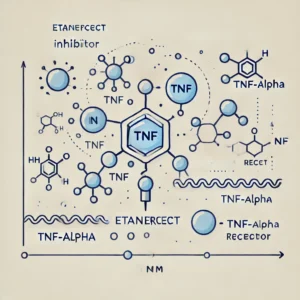
Etanercept is a recombinant fusion protein that binds and neutralizes tumor necrosis factor-alpha (TNF-α), a cytokine involved in systemic inflammation. This action reduces inflammation and prevents tissue damage, especially in autoimmune disorders. Detailed molecular insights are available at the National Cancer Institute (NCI) and the National Library of Medicine (NLM).

Mechanism of Action
Etanercept mimics the natural TNF receptor, acting as a decoy receptor to bind TNF-α and block its interaction with cell surface TNF receptors. This prevents downstream inflammatory signaling. To explore TNF biology, refer to resources from PubMed Central (PMC) and the National Institutes of Health (NIH).
Research Applications of Etanercept Biosimilar
1. Autoimmune Disease Models
Etanercept biosimilars are essential in studying autoimmune diseases such as rheumatoid arthritis, ankylosing spondylitis, and psoriasis. Information on autoimmune models can be found at ClinicalTrials.gov and NIAMS.
2. Cytokine Signaling Pathways
Understanding TNF-α signaling and its role in inflammation is a key area of research. Visit the American Association of Immunologists (AAI) for foundational studies.
3. Drug Interaction Studies
Etanercept biosimilars are valuable for evaluating drug combinations, particularly with methotrexate or other DMARDs (disease-modifying antirheumatic drugs). Learn more from the FDA’s biosimilar guidelines.
4. Biomarker Development
Biosimilars assist in identifying biomarkers that predict treatment response. Research advancements are documented at Cancer Research UK and NIH RePORTER.

Advantages of Research-Grade Biosimilars
- Cost-Effectiveness: Enables large-scale studies without the financial burden of clinical-grade drugs.
- Reproducibility: High-quality standards ensure reliable experimental results.
- Broad Accessibility: Encourages academic research collaborations worldwide. Learn more at the World Health Organization (WHO).
Regulatory Framework for Biosimilars
Etanercept biosimilars undergo rigorous evaluation to confirm equivalence in efficacy and safety. For detailed guidelines, visit the European Medicines Agency (EMA) and the FDA.
Current and Future Directions
1. Emerging Therapies
Research-grade biosimilars enable studies on next-generation TNF inhibitors. Explore the latest findings at NIH and PMC.
2. Personalized Medicine
Using Etanercept biosimilars to tailor treatments for individual patients based on genetic and molecular profiling is an expanding area. Insights are available from Genome.gov.
3. Long-term Safety and Efficacy
Understanding the long-term effects of TNF inhibition on immune homeostasis is critical. Refer to studies published by the CDC and FDA.
Conclusion
Etanercept biosimilars provide an invaluable resource for advancing autoimmune and inflammation research. By offering affordability and high quality, these biosimilars play a pivotal role in unraveling TNF-mediated pathways and developing novel therapeutic strategies. For further details, consult trusted sources such as FDA, NIH, and NCI.